
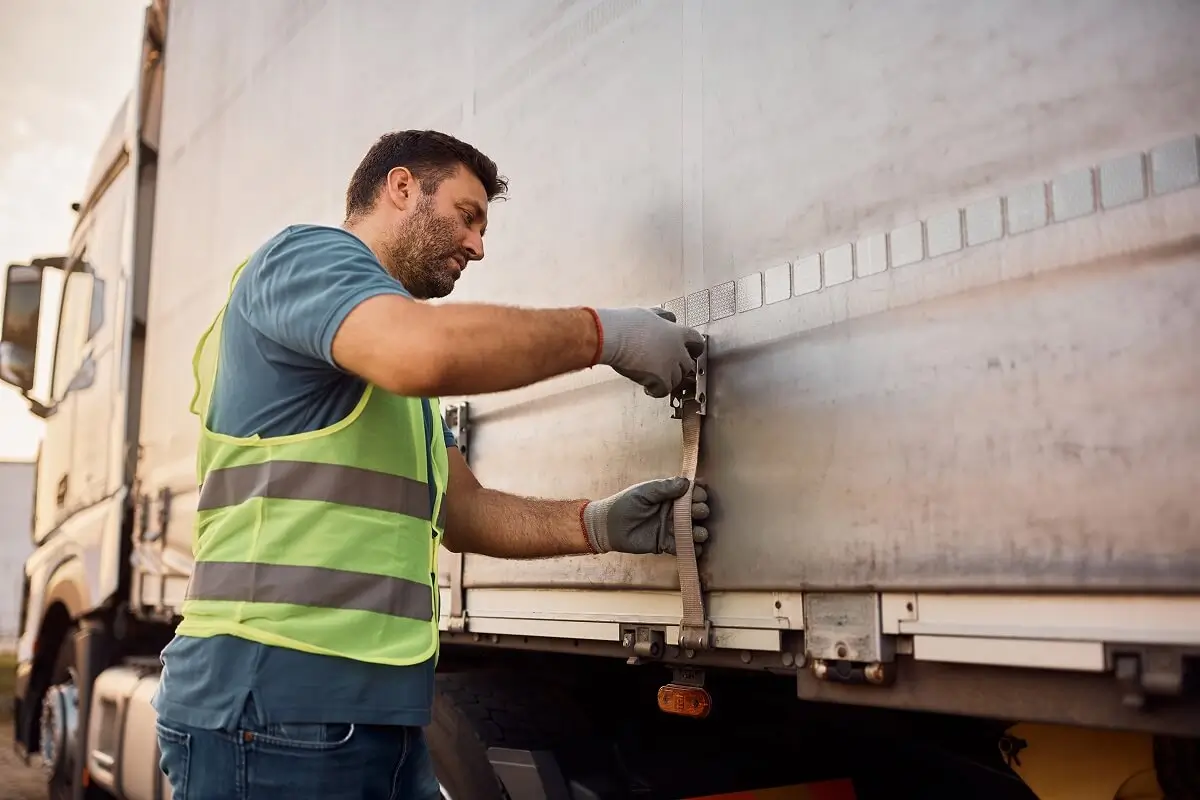
Every year, workers climbing on and off flatbed trailers to tarp a load, secure cargo, or inspect a shipment take on one of the most overlooked risks in industrial operations: a fall from height with nothing engineered to stop it. The hazard was well documented. The fix was not.
Truck Fall Prevention exists because two people with very different vantage points on this problem, an attorney who spent decades litigating the aftermath and a fleet operator who spent decades managing the risk, decided that “learn to live with it” wasn’t good enough.
A Gap Everyone Had Learned to Live With
Fall protection wasn’t a new idea when Truck Fall Prevention got started. What didn’t exist was a system built for how flatbed and open-deck operations actually work. Most fall protection on the market was designed for permanent, fixed installations, bolted-down guardrails meant for a loading dock, not a trailer that moves between sites daily.
For a driver or warehouse worker who needs to tarp a load in minutes and move on, that mismatch mattered. Heavy, slow-to-deploy systems either sat unused or slowed operations down enough that crews worked around them instead of with them. The result was a category of injury OSHA has cited for 15 straight years, and a gap nobody had closed.
Two Perspectives, One Shared Frustration
Truck Fall Prevention was founded by David Gunsberg, JD, and Jeff Bronson, two Michigan-based industry veterans with a combined 70-plus years in labor relations, manufacturing, trucking, and transportation logistics. David is an employment attorney and OSHA expert who has negotiated hundreds of labor agreements and litigated or arbitrated cases that included multimillion-dollar claims tied directly to flatbed truck falls.
He’d seen, case after case, what happens when a fall isn’t prevented. Jeff spent more than three decades managing fleets of flatbed trucks, including as a senior manager at ADICA Trucking and Logistics, where he watched crews navigate the same unsafe workarounds daily. Between them, they had both ends of the problem: the legal and human cost, and the operational reality on the ground.

Building What Should Have Existed Already
Rather than adapt an existing product, David and Jeff designed a new one. Truck Fall Prevention Systems are built from aluminum, store flat, and are engineered to deploy in under 40 seconds, fast enough that crews actually use them instead of skipping them.
The systems fit across roughly 99% of standard truck and trailer configurations, and are designed to help facilities apply OSHA 1910.29’s fall protection principles to real truck and trailer loading environments. Jeff ran the earliest research and testing on ADICA’s own fleet, deploying the system to hundreds of flatbed trucks before it ever reached an outside customer.
From One Fleet to Facilities Across North America
What started as a fix for one fleet’s problem is now protecting workers at manufacturing, steel, defense, and construction operations across the United States, Canada, and Mexico, including Eaton Steel, where David serves as in-house counsel. Every system is still built around the same three principles: precision engineering, operational clarity, and worker safety first.
The problem hasn’t changed. Workers still climb onto flatbeds every day. What’s changed is that there’s finally a system built for how that work actually happens.
FAQs
How do I get a Truck Fall Prevention system for my facility?
Reach out and tell us about your fleet or facility: trailer types, how many vehicles you run, and how workers currently access flatbeds. From there, we help match your operation to the right configuration rather than sending a one-size-fits-all setup.
What’s the difference between a Truck Fall Prevention System and traditional guardrails or harnesses?
Traditional fall protection is usually one of two things: fixed guardrails built for a stationary loading dock, or personal fall arrest gear like harnesses and lanyards that require anchor points and don’t travel with the trailer. Truck Fall Prevention Systems are different. Our On-Truck Systems install directly on trucks and trailers, our Mobile Rolling Systems roll into position around vehicles at your facility, and our Custom Systems address specialized equipment, space limitations, and access requirements.
Does using a Truck Fall Prevention system require special training?
There is no certification process like harness-based fall arrest systems require. Because there’s no rigging, anchor points, or personal protective equipment to fit and inspect, crews can learn correct use as part of routine safety onboarding rather than a separate certification track.
Is a Truck Fall Prevention system a permanent modification to the trailer?
No. It’s designed as an add-on, not a structural change. The systems mount directly to the trailer and are easily removed, or they can roll into position around it, and they can be tailored to specific trailer dimensions, space limitations, and access requirements.
See the System Built to Solve the Problem
Truck Fall Prevention systems are engineered from real problems our own founders lived through, not off-the-shelf equipment retrofitted for the job. Tell us about your facility by submitting the form below, and we’ll help you find the right fit.
{ "@context": "https://schema.org", "@type": "FAQPage", "mainEntity": [ { "@type": "Question", "name": "How do I get a Truck Fall Prevention system for my facility?", "acceptedAnswer": { "@type": "Answer", "text": "Reach out and tell us about your fleet or facility: trailer types, how many vehicles you run, and how workers currently access flatbeds. From there, we help match your operation to the right configuration rather than sending a one-size-fits-all setup." } }, { "@type": "Question", "name": "What's the difference between a Truck Fall Prevention system and traditional guardrails or harnesses?", "acceptedAnswer": { "@type": "Answer", "text": " Traditional fall protection is usually one of two things: fixed guardrails built for a stationary loading dock, or personal fall arrest gear like harnesses and lanyards that require anchor points and don't travel with the trailer. Truck Fall Prevention Systems are different. Our On-Truck Systems install directly on trucks and trailers, our Mobile Rolling Systems roll into position around vehicles at your facility, and our Custom Systems address specialized equipment, space limitations, and access requirements." } }, { "@type": "Question", "name": "Does using a Truck Fall Prevention system require special training?", "acceptedAnswer": { "@type": "Answer", "text": "No certification process like harness-based fall arrest systems require. Because there's no rigging, anchor points, or personal protective equipment to fit and inspect, crews can learn correct use as part of routine safety onboarding rather than a separate certification track." } }, { "@type": "Question", "name": "Is a Truck Fall Prevention system a permanent modification to the trailer?", "acceptedAnswer": { "@type": "Answer", "text": "No. It's designed as an add-on, not a structural change. The systems mount directly to the trailer and are easily removed, or they can roll into position around it, and they can be tailored to specific trailer dimensions, space limitations, and access requirements." } } ] }