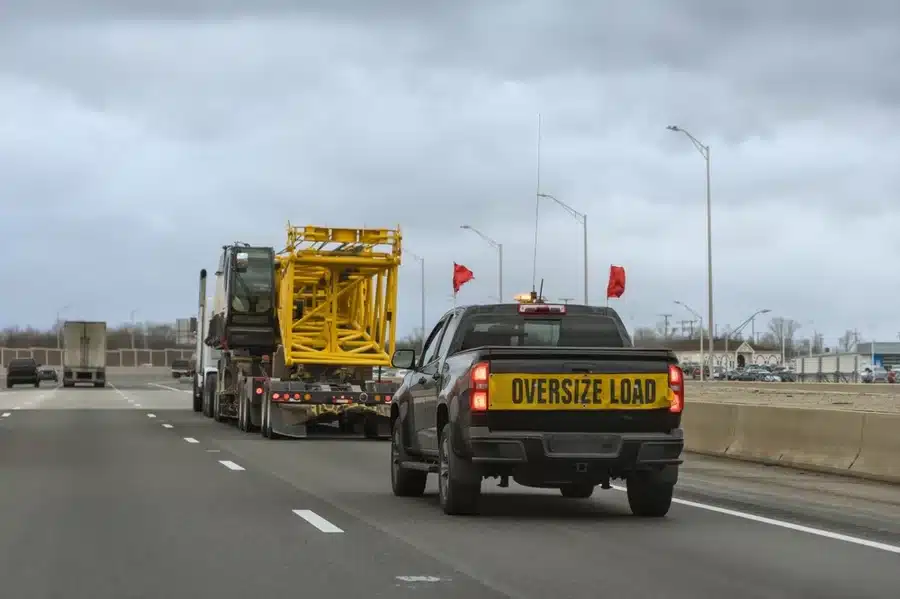
TL;DR: Working on an oversize load truck can expose operators to open edges, elevated surfaces, unstable footing, and changing load configurations. Effective fall prevention combines the right equipment with procedures designed around the truck, cargo, and task.
- Use guardrails and other passive systems where practical to create a physical barrier at exposed edges.
- Provide stable, purpose-built access instead of relying on tires, bumpers, cargo, or improvised climbing methods.
- Consider mobile or custom fall protection for oversized loads with changing dimensions and access requirements.
- Keep walking and working surfaces clear, stable, and free of avoidable slip and trip hazards.
- Train employees to recognize fall hazards and correctly use the protection provided.
An oversize load truck presents challenges that standard trailers may not. Operators may need to access flatbed trailers in truck lanes, outdoor loading areas, or designated strapping and tarping stations to inspect cargo, position securement equipment, or prepare a load for transportation.
When hauling oversized loads, cargo dimensions and configurations can change from job to job. That makes a one-size-fits-all approach to fall prevention difficult. Steel, building materials, machinery, and fabricated components can create irregular surfaces, restricted access points, and exposed edges.
For EHS, yard, warehouse, and logistics managers, the objective should be straightforward: reduce the need for employees to work near an unprotected edge and provide reliable protection when elevated work cannot be eliminated.
Essential Oversize Load Safety Equipment
1. Guardrail Systems
Guardrails provide passive fall protection by creating a physical barrier between the employee and an exposed edge. In general industry, OSHA 29 CFR 1910.28 requires protection for employees on covered walking-working surfaces with unprotected sides or edges 4 feet or more above a lower level, subject to the standard’s scope and exceptions.
For truck operations, mobile guardrails can be particularly useful because protection can be positioned around the work area and relocated as operations change.
2. Safe Access Equipment
Getting onto and off the working area deserves as much attention as the work performed at height. Employees should have stable access designed for the task rather than climbing on tires, cargo, trailer components, or other surfaces not intended as access points.
Platforms, stairs, steps, and handrails can provide a more controlled route while reducing awkward climbing.
3. Mobile and Custom Truck Fall Systems
Standard equipment will not fit every oversized load. Trailer length, cargo dimensions, loading processes, available space around the trailer, and employee movement can all affect system selection.
When off-the-shelf equipment cannot adequately address these variables, custom fall prevention systems can be engineered around the actual workflow. The goal is to protect operators without creating unnecessary obstacles that slow loading, securement, or inspection.
4. Personal Fall Protection
Some operations may require personal fall protection, such as travel restraint or personal fall arrest systems. Under OSHA’s general-industry rules, these systems must meet applicable requirements, including those in 29 CFR 1910.140.
System selection requires careful consideration of anchorage, clearance, equipment compatibility, employee training, and the specific work being performed.
Safety Practices for Wide Load Hauling
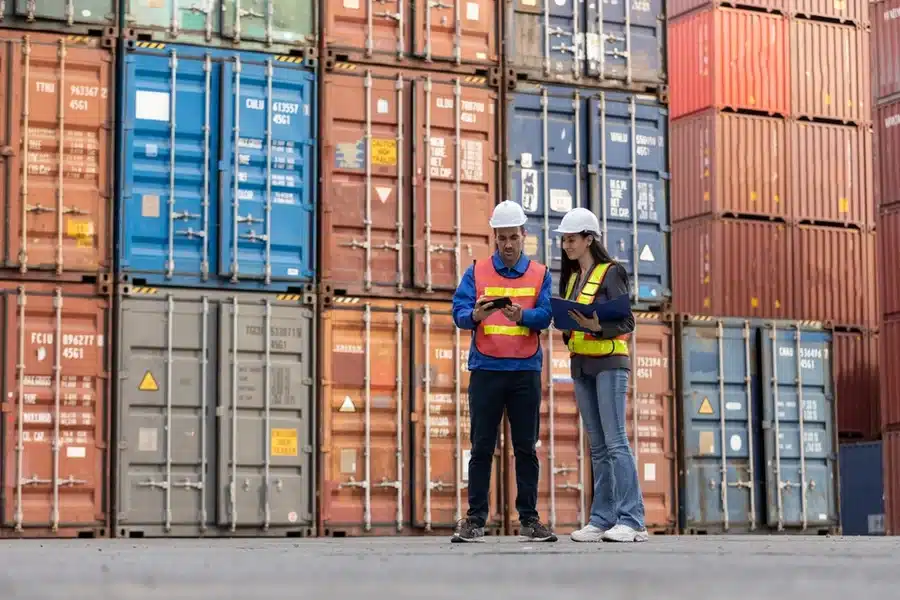
Equipment is only one part of a strong fall prevention program. Before employees access an oversized load, employers should evaluate where they will climb, stand, walk, and work. That assessment should account for tasks performed in truck lanes, outdoor loading areas, and strapping or tarping stations.
For wide load hauling, practical controls include keeping access areas clear, inspecting fall prevention equipment before use, maintaining three points of contact where appropriate during access, and preventing employees from improvising climbing routes.
Training is equally important. Workers should understand the hazards associated with each task and know how to deploy and use the selected truck fall systems correctly.
Build Fall Prevention Around the Work
Effective oversize load safety equipment should support the operation rather than force employees to work around the safety system. For facilities handling steel, machinery, construction materials, or other large freight, that may require a solution engineered around specific trailers, loads, and workflows.
Truck Fall Prevention develops fast-deploying fall protection and custom access solutions designed to help crews work safely without creating unnecessary downtime.
Learn more today about creating a fall prevention solution built around your oversize load truck operations. Request your quote today.
Frequently Asked Questions
What are the OSHA fall protection requirements for trucks?
There is not one universal OSHA fall-protection rule that applies identically to every truck task. Requirements depend on factors including the industry, activity, equipment, and surface involved. For example, OSHA’s general-industry walking-working surface standard generally requires fall protection at unprotected edges 4 feet or more above a lower level when the standard applies. OSHA has separately explained that construction Subpart M excludes vehicles and trailers from its definition of walking-working surfaces. Employers should evaluate the specific operation and applicable standards.
What are the 5 P’s of falls prevention?
The “5 P’s” commonly refers to a healthcare patient-rounding concept, not an OSHA industrial fall-prevention standard. Versions typically address factors such as pain, position, personal needs/toileting, placement of possessions, and pathway or prevention. For industrial truck operations, employers should instead focus on task-specific hazard assessment, engineering controls, safe access, appropriate fall protection, and employee training.
What type of fall protection is required when working from a bucket truck?
For aerial lifts covered by OSHA 29 CFR 1910.67, employees must wear a personal fall arrest or travel restraint system meeting applicable requirements and attach it to the boom or basket. Workers must also stand firmly on the basket floor rather than climbing or sitting on its edge.
What equipment is used for fall prevention?
Depending on the application, fall prevention equipment can include guardrail systems, mobile barriers, access platforms, stairs, handrails, travel restraint systems, personal fall arrest systems, and properly designed anchorage systems. The appropriate equipment depends on the hazard and work environment.
What are the OSHA fall protection requirements?
Requirements vary by industry and task. OSHA generally identifies a 4-foot threshold for general industry and a 6-foot threshold for many construction activities, with separate requirements and exceptions for particular hazards and operations. Protection can include guardrails, safety nets, or personal fall protection systems where the applicable standard permits or requires them.