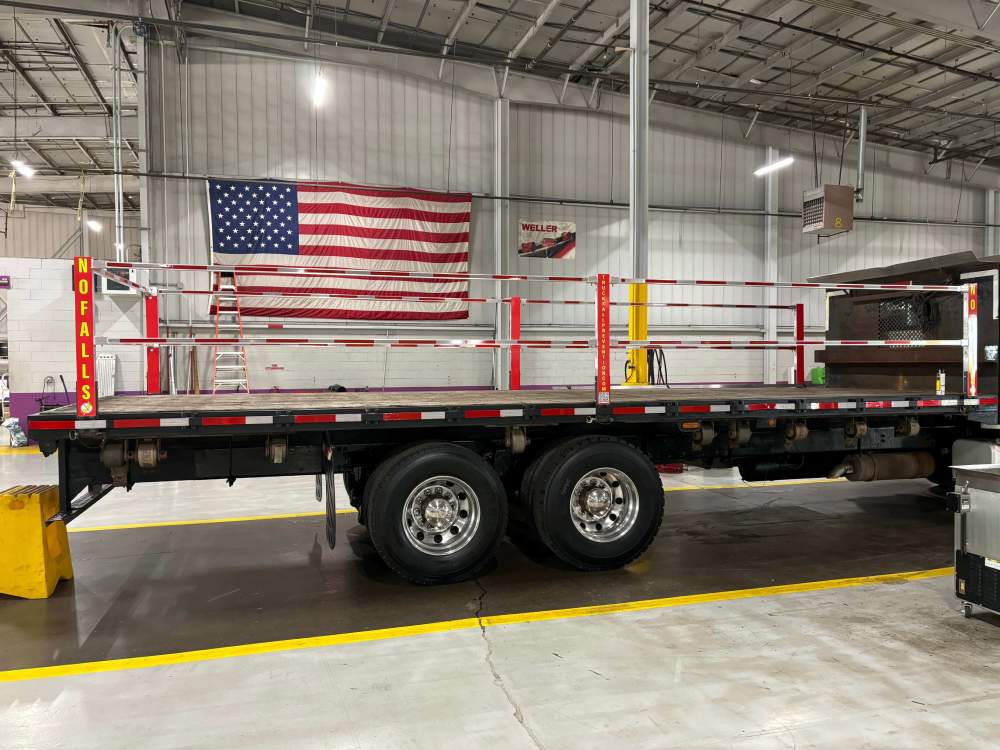
When budgets are tight and margins are thin, fabricating a flatbed fall protection system in-house can seem like a practical way to control costs. A few welded rails, some rope through the stake pockets, a plank along the deck edge; the logic is that something is better than nothing.
In practice, that reasoning carries significant risk.
OSHA Doesn’t Grade on a Curve
When guardrail systems are used to protect workers on applicable walking-working surfaces, OSHA 1910.29 establishes specific criteria for their height, strength, construction, and performance.
Systems must meet defined load ratings, height specifications, and structural integrity thresholds. A guardrail, for example, must withstand 200 pounds of force applied in any outward or downward direction at the top rail.
Homemade systems rarely meet these requirements. Without engineering documentation, load testing, and appropriate materials, there is no way to demonstrate compliance, and OSHA inspectors do not accept intent as a substitute for documented performance.
Willful violations can run as high as $165,514 per incident, with repeat violations carrying the same maximum.
Liability Falls on You
When a worker is injured, and the fall protection system in use was neither purpose-built nor certified, the liability exposure shifts significantly.
A fabricated guardrail with no engineering documentation, no load test records, and no manufacturer accountability leaves little room to defend the reasonableness of the setup in litigation.
Your workers’ compensation carrier and general liability insurer will also examine what system was in place at the time of an incident. A DIY system with no documentation may complicate or limit coverage at precisely the moment you need it most.
The Hidden Costs Add Up
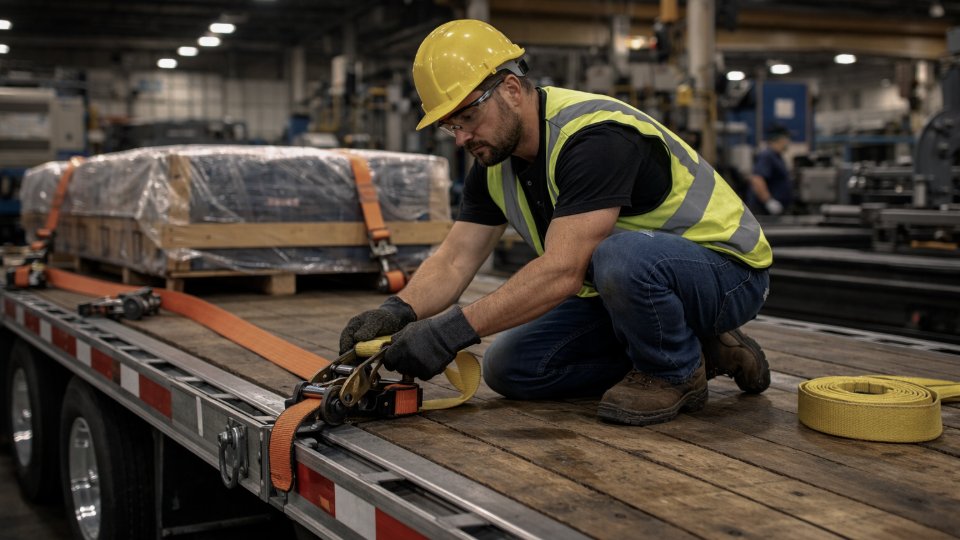
The upfront savings of a DIY build are real, but the full cost picture is rarely straightforward. Consider the time required to source materials, fabricate, test, and install a system across multiple facilities, plus ongoing maintenance as welds crack and components shift under load.
Factor in the financial exposure of a single OSHA citation, workers’ comp claim, or lawsuit, and the economics of homemade fall protection deteriorate quickly.
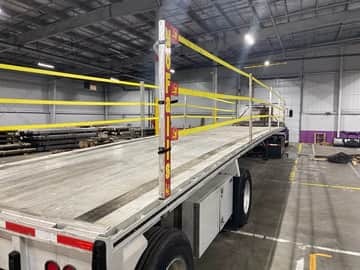
Purpose-built systems are engineered to install quickly, perform consistently, and hold up across years of use without constant rework. Truck Fall Prevention’s flatbed fall protection systems are designed specifically for open-deck trailers, OSHA 1910.29 compliant, and priced at least 66% below competing products, making compliance achievable without the liability exposure of a homemade solution.
Before You Fabricate, Compare the Full Cost
A DIY build may reduce the initial purchase price, but it also places responsibility for engineering, testing, documentation, maintenance, and system performance on your team.
Truck Fall Prevention offers purpose-built options for standard and non-standard truck and trailer configurations. Tell us about your equipment and workflow, and we’ll help identify a practical option.
Engineering Is More Involved Than It Appears
Fall protection looks straightforward until something fails. The geometry of a guardrail, the tensile strength of a strap system, the load distribution across a trailer deck: these involve engineering variables that fabrication alone cannot reliably address.
A system that appears structurally sound in the yard may fail under real-world loading conditions, and the consequences of that failure are serious.
Purpose-built systems are tested under controlled conditions before they reach a truck. Without that process, field performance is unknown until an incident makes it apparent.
The Bottom Line
The appeal of a homemade fall protection system is understandable, particularly for smaller operations managing tight budgets. However, the liability exposure, compliance risk, and potential for serious worker injury make unengineered systems a poor investment regardless of how carefully they are built.
Compliant, cost-effective options exist for operations of every size, and investing in a purpose-built system is a more defensible position on every front.
DIY vs. Purpose-Built Comparison
| Consideration | DIY System | Purpose-Built System |
| Engineering documentation | Must be created internally | Provided or supported by manufacturer |
| Performance testing | Internal responsibility | Tested before deployment |
| Consistency across locations | May vary by fabricator | Repeatable system design |
| Maintenance | Custom repair responsibility | Replacement parts and support |
| Accountability | Primarily rests with buyer | Manufacturer support |
| Installation | Must be designed internally | Designed for a defined application |
Frequently Asked Questions About DIY vs. Commercial Fall Protection
Can I use my truck’s existing stake pockets or side rails as fall protection?
No. Stake pockets and side rails are load-securing features, not fall protection. They are not designed or rated to arrest a fall or meet OSHA guardrail performance requirements. Using them as fall protection would not constitute compliance under 1910.29.
Will my insurer cover an incident if I’m using a DIY fall protection system?
It depends on your policy language, but DIY fall protection with no documentation creates real coverage risk. Insurers examine whether reasonable, documented steps were taken to meet safety standards. An uncertified, fabricated system can be used to argue that standard was not met.
How does OSHA enforce fall protection requirements on flatbed trailers?
OSHA can inspect worksites where loading and unloading occur, including shipper and receiver facilities. If a driver or worker is observed working at height without compliant fall protection, or if an incident triggers an investigation, OSHA can cite both the truck owner and the facility. Citations are assessed per violation and can escalate for willful or repeat offenses.
Ready to Get It Right?
Not sure which system fits? Tell us what type of truck or trailer you use, where employees are exposed, and whether you have stake pockets, height restrictions, or limited working space. Our team will help narrow down the options.